Modern manufacturing depends on much more than the ability to fasten components together. Every screw, bolt and assembled joint must meet specific requirements for strength, consistency and reliability. In industries where thousands of products move through production lines every day, even small variations in the assembly process can affect product quality, operating costs and customer satisfaction.
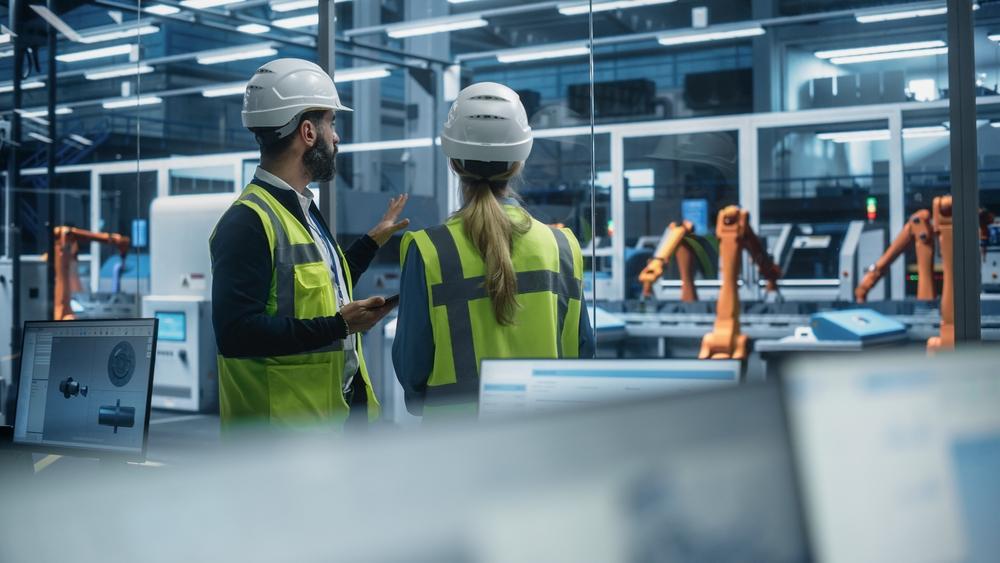
Industrial assembly tools have evolved to meet these demands. Manufacturers can now choose between electric, pneumatic, cordless and manually operated solutions, each offering different advantages depending on the application. Alongside the tools themselves, advanced controllers, monitoring systems and software are making it possible to manage assembly processes with greater precision.
The right solution depends on several factors, including the type of joint, required tightening torque, production volume and working environment. An assembly station handling delicate electronic components has different requirements from one fastening heavy machinery or automotive structures.
Understanding the available technologies helps manufacturers select equipment that supports efficient production without compromising quality. It also provides a foundation for introducing automation, improving traceability and creating more consistent assembly operations.
Electric and pneumatic assembly tools for different production needs
Electric and pneumatic tools are two established technologies in industrial assembly. Both are widely used for fastening operations, but their operating principles and capabilities differ. Selecting between them requires an understanding of the application rather than simply comparing power or purchase price.
Manufacturers exploring industrial tightening equipment can find that everything you need to know is online, where Atlas Copco presents electric and pneumatic assembly tools alongside cordless solutions, torque controllers, feeding systems and software. These product categories demonstrate how different technologies can be combined to address the requirements of modern manufacturing.
Electric assembly tools use an electric motor to generate the rotational force needed for tightening. Depending on their design, they can provide controlled torque, programmable tightening sequences and detailed information about individual fastening operations.
One of their major advantages is the ability to integrate tightening operations with digital control systems. Certain electric tools can measure torque and angle throughout the tightening cycle, allowing manufacturers to evaluate whether a joint has been assembled according to specified parameters.
This is particularly valuable in applications where fastening quality must be documented. Automotive manufacturing, for example, often requires precise tightening of safety-related components, while electronics production may involve smaller fasteners with narrow acceptable torque ranges.
Electric tools are available in several configurations. Some are connected to dedicated controllers through cables, while cordless versions use rechargeable batteries to provide greater freedom of movement.
Pneumatic assembly tools operate using compressed air. They have a long history in industrial production and remain relevant because of their robust construction, established technology and suitability for many repetitive tasks.
Compressed-air tools can be useful in environments where pneumatic infrastructure is already available. They are often selected for straightforward fastening applications where consistent operation, manageable weight and durability are important.
However, pneumatic systems require a reliable supply of compressed air. Compressors, distribution pipes, filters and pressure regulators all contribute to the overall installation. Air leaks and inefficient distribution can increase energy consumption and operating costs.
Pneumatic tools also vary in their level of control. Some are designed for relatively simple tightening tasks, while others incorporate shut-off mechanisms or additional monitoring equipment to improve consistency.
Neither technology is universally superior. Electric tools may offer advantages where advanced process control and data collection are essential, while pneumatic tools can remain practical for established production environments with suitable air infrastructure.
The best choice depends on the required performance, existing facilities and the total cost of operating the equipment throughout its service life.
Torque control and fastening accuracy in industrial assembly
Torque is one of the most important parameters in threaded fastening. It describes the rotational force applied to a fastener and is commonly measured in newton metres or other appropriate torque units.
During tightening, torque helps generate the clamping force that holds assembled components together. However, the relationship between applied torque and resulting clamp load is influenced by friction, surface condition, lubrication and joint design.
This means that applying the same torque to two apparently identical fasteners does not always produce exactly the same clamping force. Manufacturers must therefore understand the behaviour of the joint before establishing an appropriate tightening strategy.
For many applications, torque-controlled tightening provides a practical method of achieving repeatable assembly. A tool is configured to reach a specified torque, and the tightening operation ends when the required condition is met.
More advanced systems can combine torque measurement with angle monitoring. By observing how far a fastener rotates during tightening, the system can provide additional information about joint behaviour.
Torque-angle strategies are particularly useful where joint characteristics must be monitored closely. They can help identify certain abnormal conditions, such as unexpected resistance or differences in the tightening sequence.
The correct strategy depends on the fastener, materials and engineering requirements. It should be established through suitable testing and validation rather than relying on a general setting across unrelated applications.
Manual torque wrenches also remain important. They can be used for selected assembly operations, maintenance work and verification tasks where powered tightening equipment may not be necessary.
Whatever the tool type, calibration and maintenance are essential. A tightening system that has drifted outside its specified performance range can produce inconsistent results even when operators follow the correct procedures.
Regular verification helps manufacturers establish whether equipment continues to perform within acceptable limits. Calibration intervals should reflect the manufacturer’s recommendations, operating conditions and the importance of the application.
When tightening requirements are clearly defined and equipment is maintained correctly, manufacturers can reduce variation and establish more reliable assembly processes.
Automation and error-proofing improve assembly consistency
Industrial assembly is increasingly supported by automation and error-proofing technologies. These solutions aim to reduce the likelihood of mistakes while helping operators perform tasks consistently.
A common challenge in manual assembly is ensuring that every required fastener has been tightened correctly. On a product containing numerous screws and bolts, an omitted fastening operation can be difficult to detect through visual inspection alone.
Error-proofing systems can address this problem by monitoring the assembly sequence. Depending on the installation, they may track the number of completed tightenings, confirm tool positioning or prevent the next production step until specified conditions have been satisfied.
This approach is often associated with the manufacturing concept of poka-yoke, which focuses on preventing mistakes or making them immediately apparent.
Tool controllers can play a central role in such systems. They manage tightening parameters, receive measurement information and communicate results to other equipment on the production line.
In a connected production environment, tightening results may be associated with a particular product or serial number. This creates a record of assembly operations that can support quality assurance and investigations when problems occur.
Automated feeding systems provide another opportunity to improve production efficiency. By delivering screws or other fasteners to the assembly point, they can reduce repetitive handling and help maintain a more consistent workflow.
Fixtured assembly tools are also used where repeatability is especially important. Mounting the tool in a controlled fixture can help maintain positioning and reduce variations caused by manual handling.
For applications with high production volumes, robotic tightening cells can perform repetitive operations according to programmed sequences. Such systems may be appropriate when product geometry, cycle times and production requirements justify automation.
However, automation is not automatically the best solution for every assembly process. Products with frequent design changes, low production volumes or complex access requirements may benefit from more flexible manual or semi-automated systems.
A successful implementation begins with understanding the actual production challenge. Manufacturers should identify where errors occur, how frequently they happen and which improvements would provide measurable value.
The objective is not simply to replace manual work with machines. It is to create an assembly process that delivers the required quality with appropriate efficiency, flexibility and operator involvement.
Connected tools and software support the smart factory
The development of connected assembly tools has expanded the role of fastening equipment within manufacturing. Tools that previously performed isolated operations can now communicate with controllers, production management systems and quality databases.
This connectivity makes it possible to collect information about individual tightening cycles. Depending on the equipment, recorded data may include torque values, tightening angles, timestamps, tool identification and the outcome of each operation.
Such information can support traceability. If a manufacturer needs to investigate a quality concern, assembly records may help establish which operations were completed and whether they met the defined requirements.
Data collection can also reveal patterns that are difficult to identify through occasional inspections. For example, an increasing number of rejected tightening cycles at one workstation may indicate tool wear, a component issue or a change in the assembly process.
When this information is reviewed systematically, maintenance and production teams can investigate potential problems before they lead to more extensive disruption.
Software solutions can also simplify the management of tightening programmes. Instead of configuring every tool independently, manufacturers may be able to distribute approved settings and maintain more consistent process control across multiple workstations.
This can be especially useful in facilities producing several product variants. Different assemblies may require different torque levels, fastening sequences or verification procedures.
A connected system can help ensure that the correct programme is selected for the product being assembled. However, reliable identification methods and properly configured controls are necessary to prevent incorrect settings from being applied.
The broader concept of the smart factory involves connecting equipment, processes and information to support better operational decisions. Assembly tools are one part of this environment, alongside production machinery, sensors and manufacturing software.
Integration should nevertheless be approached carefully. Data quality, system compatibility, cybersecurity and maintenance requirements all influence whether a connected solution delivers its intended benefits.
Collecting large quantities of information is not useful unless manufacturers can interpret it and act on the results. Clear performance indicators and defined responsibilities are therefore important elements of any digital assembly strategy.
Selecting assembly solutions for long-term productivity
Choosing industrial assembly equipment involves more than identifying a tool capable of reaching a particular torque. The complete production process should be considered, including operator requirements, maintenance, quality assurance and future manufacturing needs.
Ergonomics is an important factor in repetitive assembly. Tool weight, grip design, reaction forces and working position can influence operator comfort and physical strain over time.
For higher-torque applications, reaction arms or fixtured systems may help manage forces that would otherwise be transferred to the operator. The suitability of these solutions depends on the workstation layout and the specific tightening task.
Accessibility also matters. Some fasteners are positioned in narrow or obstructed spaces, making conventional tools difficult to use. Angle heads, geared front attachments and other specialised configurations can provide access while maintaining the required tightening function.
Production volume should influence the level of investment. A workstation performing occasional fastening operations may require a relatively simple solution, while a high-volume assembly line may justify advanced monitoring, automation and integrated software.
The total cost of ownership is another consideration. Initial purchase price is only one part of the calculation. Energy consumption, maintenance, calibration, spare parts, operator training and potential production interruptions can all affect long-term costs.
Manufacturers should also consider how easily the equipment can adapt to future changes. A production line may need to accommodate new product designs, different fasteners or revised quality requirements.
Modular equipment and configurable control systems can offer advantages when flexibility is important, although the most suitable approach depends on the production environment.
Before introducing new assembly technology, it is sensible to evaluate the existing process and define clear objectives. These may include reducing rejected assemblies, improving cycle times, strengthening traceability or making workstations more ergonomic.
Testing the proposed solution under realistic production conditions helps establish whether it can meet these objectives. Operator feedback, engineering validation and maintenance considerations should all contribute to the decision.
Electric, pneumatic, cordless and manual tools each have a place in modern industrial assembly. When selected according to the demands of the application and supported by appropriate process control, they can contribute to consistent quality and efficient production.
The greatest benefits often come from considering the tools as part of a complete assembly system. Combining suitable equipment with reliable tightening strategies, quality monitoring and effective maintenance provides a stronger foundation for manufacturing operations that must remain productive and adaptable over time.